Holidayz · Travel · 2026
A proactive AI travel assistant that solves problems before they start
Overview
Holidayz is an AI trip planner in two steps. Before the trip, Holi builds a day-by-day plan around your budget, your constraints and your flight. During it, Holi spots problems early and proposes a fix.
The problem
AI trip planners write a plan,
then leave the traveller alone with it
Studying nine of the leading travel and AI planners, from Mindtrip to Wanderlog, three gaps kept coming up.
No budget
None of the leading planners plans to a budget. Spending is tracked after the plan is made, if at all.
Constraints get lost
Diet, allergies and a flight that’s already booked stay in the traveller’s head, not in the plan.
Silent on the road
The AI only answers when asked. Rain, a closure or a tiring day is the traveller’s problem to spot.
The solution
An AI planner that stays with the trip,
from the first question to the last day
Holi, the app’s AI planner, was designed around those gaps.
Planned to a budget
Every plan and every change shows the cost, before → after, so the trip stays within what was set.
Constraints built in
Diet, allergies and flight times are asked once, repeated back, and respected in every suggestion.
Speaks first on the road
Rain tomorrow? Holi notices, offers indoor swaps, and the traveller decides in two taps.
Research
What nine top trip planners get right,
and the gap they all leave
Before designing each flow, I used Claude with Mobbin’s MCP to study
how leading travel and AI apps handle that exact moment.
Mobbin research · 9 apps
- Tripadvisor
- Wanderlog
- Mindtrip
- Polarsteps
- Booking.com
- Agoda
- Vrbo
- Trip.com
- Copilot
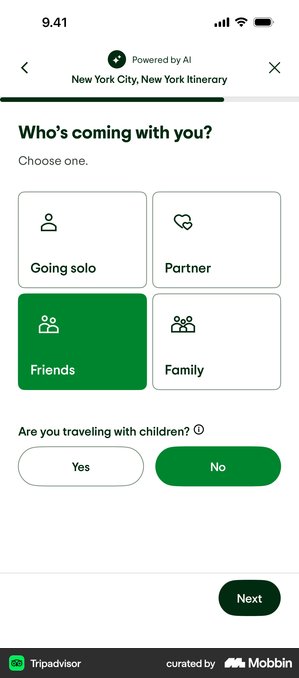
- 01
One question per screen
- Tripadvisor
- Vrbo
Onboarding
- 02
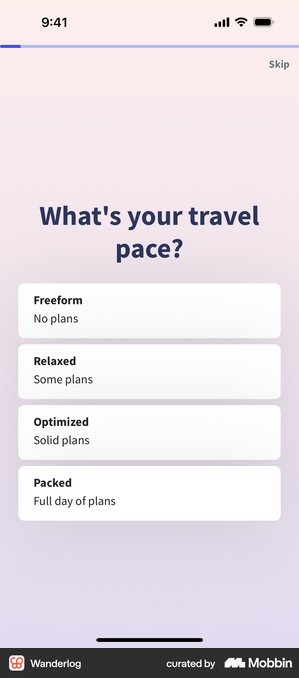
A travel profile, set once
- Wanderlog
- Polarsteps
Onboarding
- 03
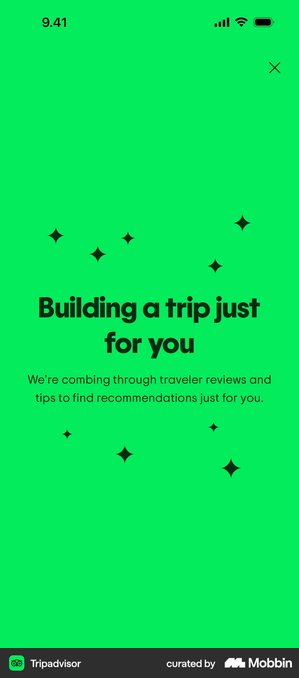
A “Building your trip” moment
- Tripadvisor
Onboarding
- 04
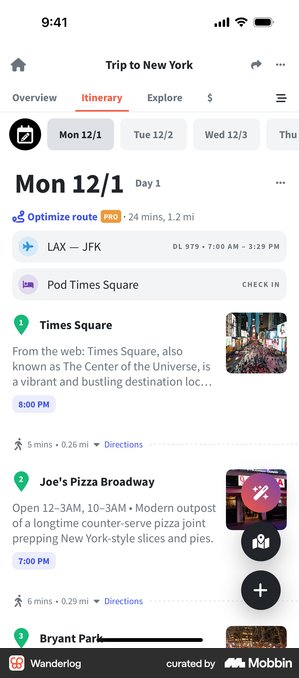
An editable day-by-day timeline
- Wanderlog
- Tripadvisor
The plan
- 05
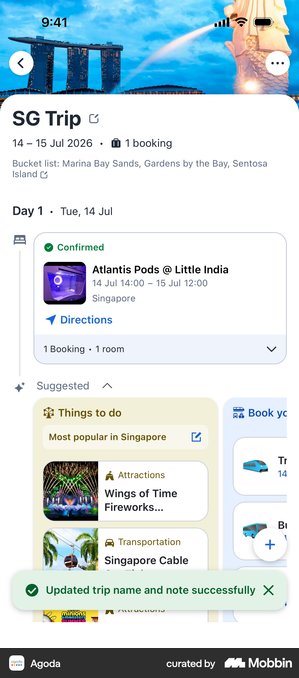
Suggestions next to confirmed bookings
- Agoda
- Mindtrip
The plan
- 06
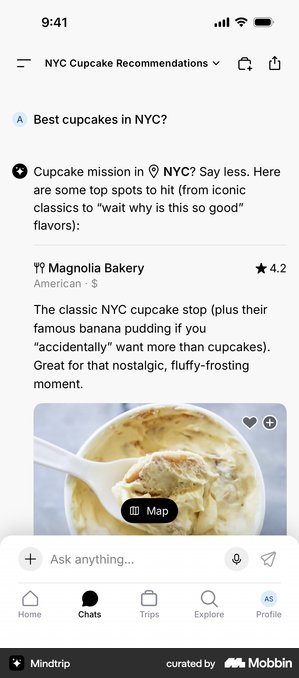
A chat that knows the trip
- Mindtrip
- Wanderlog
- Booking.com
Ask Holi
- The gap
Planning to a budget
Found in none of the nine. It became Holidayz’s clearest difference.
Process
Research, explore, review, iterate.
For every flow.
With no access to real users, I ran the same loop with Claude for each of the nine flows. Persona reviews stood in for usability testing, to catch friction early.
1. Research
Mobbin patterns for that specific moment, before any design.
2. Explore
Two or three options per flow, explored with Claude.
3. Review
Claude walked each option as the persona and scored it 1–5.
4. Iterate
I combined the best moments and refined them in Figma.
Persona review · Onboarding, option B
- Busy professional
- Keeps kosher
- Fava bean allergy
- Flight already booked
- Welcome“It tells me up front how long this takes.”4
- Where to?“Milan is ticked, but the search box is empty. Did I pick it?”3
- Dates“Nowhere to say my flight is already booked.”3
- Who’s coming“Partner, then a travellers count: the same question twice.”3
- Budget“The split across stays and food helps me trust it.”4
- Interests“My allergy only fits a vague “Anything else?” box.”2
- Pace“Simple, with clear descriptions.”5
- Building“Nothing about kosher or my allergy. I can’t trust it yet.”2
Average confidence
Verdict
None works as designed. Keep B’s pace, and borrow two things from C: a food and health step, and the flight times.
Two steps
The same trip, two very different moments
I split the experience into two steps, because what a traveller needs at home, weeks before the trip, is not what they need during the trip.
Step 1 · Before the trip
Plan it on the laptop or the phone
People plan at their desk and check in later on their phone,
so both devices are built on the same three parts.
What’s left to do
Home is a trip dashboard: the flight, the 3 things left (book a stay first) and the budget.
The whole plan
A 6-day timeline with booked items marked apart from Holi’s suggestions.
Holi, when asked
Change a day, swap a stop or ask a question, and see the impact before saving.
Onboarding
Seven questions, and the trip is planned
None of the three first options worked as designed. The final flow keeps option B’s pace and adds what the persona trusted in option C: a food and health step, the flight times, and a passport that repeats it all back before Holi builds the trip.
Ask Holi
Change a day by describing it
“We land tired, make Day 1 lighter.” Holi shows the change inside the plan, with walking and cost before → after, then Apply or Undo. If a request is vague, it asks one question instead of guessing.
Swap a stop
Change one stop without losing the day
Swapping in place scored highest, because the traveller sees how each option changes the day. If none fit, they can write what they want instead.
Step 2 · During the trip
A self-initiated assistant that speaks first
On the road, the traveller shouldn’t have to watch the plan. Holi spots rain at Lake Como tomorrow, offers indoor swaps with the cost, and the traveller applies them in two taps.
Reflection
What I learned designing with AI,
and designing an AI
Claude made it fast to research, explore and pressure-test every flow on my own, but it can’t feel a real traveller’s fatigue. Holidayz is a personal concept with no usage data yet, so next I’d test both steps with real travellers and track these KPIs.
Before the trip
- Time to a first plan
- Plans that stay within the budget the traveller set
During the trip
- Proactive fixes the traveller accepts
- Problems caught before they happen